
Alya Bath · Planning and advice
Bathroom Vanity Care: Cabinets, Tops, Hardware and Leaks
Published: · Updated:
Bathroom vanity maintenance starts with drying splashes before they sit on cabinet edges and checking underneath the sink before a small drip becomes hidden damage. Cleaning is a separate decision: a cleaner suitable for a ceramic basin may be unsuitable for the marble beside it, the cabinet coating below it or the metal hardware.
Alya Bath is a bathroom vanity manufacturer and distributor whose recovered catalogue includes marble, quartz and acrylic/resin tops with different cabinet constructions. Those records help identify what you may own, but they aren’t model-specific care instructions. Use the catalogue to find your model, then confirm the top material, finish and compatible cleaners before treating a stubborn mark.
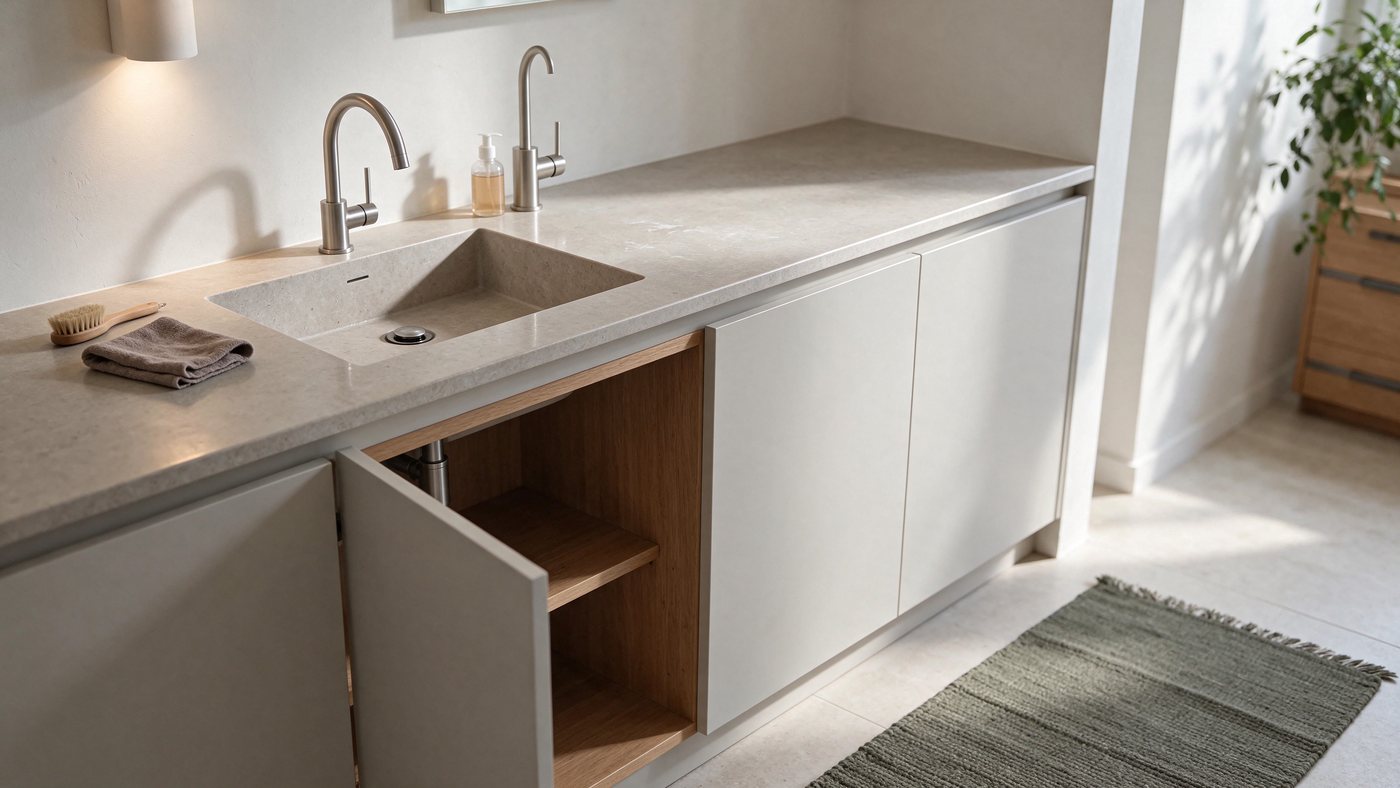
AI-generated new concept illustration; not a recovered original, actual Alya Bath product photograph, measurement, or verified depiction of any specific SKU or facility.
Identify each surface before choosing a cleaner
A white countertop can look similar across several materials. For example, a resin integrated basin and a quartz top with an undermount ceramic basin need different repair decisions. Check your invoice, cabinet label and model documents rather than judging by color.
The recovered Alya Bath records offer useful examples:
- Norwalk describes a 1-inch Italian White Carrara marble top, attached ceramic basin and soft-closing, full-extension drawers. Its collection-level solid-hardwood wording differs from the solid-hardwood-and-plywood wording in detailed product records; confirm your cabinet’s construction.
- Vanea records describe white quartz, a ceramic undermount basin, solid wood with a moisture-resistant coating, dovetail drawers and brushed nickel hardware. Moisture-resistant does not mean you should leave water on the cabinet.
- The recovered 24-inch Ripley AT-8006 records describe MDF/wood veneer cabinetry, an acrylic resin integrated sink/top and a soft-closing drawer. Don’t assume its surface has the same composition or finish as every product labeled “solid surface.”
- Sortino AB-MD684-RW describes laminated wood veneer, soft-closing doors and drawers, chrome handles and a white solid-surface-resin sink with overflow. Its archived scratch- and stain-resistance wording isn’t a promise that damage cannot occur.
If the material remains uncertain, use a soft cloth to remove loose dirt and ask for instructions before applying stain removers, polish or sealer. The countertop materials guide explains the top-and-basin combinations in more detail.
Set a care routine that catches moisture early
A damp bottle base can leave water against the countertop edge even after you’ve wiped the basin. Lift containers during cleaning and check beneath them. Keep a clean drying cloth nearby so the routine is easy to repeat.
Use this as a household inspection schedule, not a manufacturer-required service interval. Increase checks if the bathroom gets heavy use or has a history of leaks.
After use or a spill
Dry splashes on the top, faucet base, cabinet front and exposed edges. Blot colored or oily spills rather than spreading them. On natural stone, the Natural Stone Institute recommends prompt blotting, mild soap and water, rinsing and thorough drying. Keep rinse water away from cabinet joints. 1
Don’t hang a wet towel over a cabinet door. Use the bathroom exhaust fan or open a suitable window during showering to reduce moisture; ventilation doesn’t replace drying pooled water. 2
During weekly cleaning
Move toiletries and wipe the top using the approved method for its material. Clean cabinet fronts with a soft, lightly dampened cloth where the finish instructions permit, then dry them. Apply any approved cleaner to the cloth rather than spraying cabinet joints or hardware directly.
Open the cabinet and look for dampness, stained shelf corners, drips and musty smells. Check that stored containers haven’t tipped or blocked your view of the plumbing.
Once a month, and after plumbing work
Operate each door and drawer slowly. Look for changed gaps, scraping, loose handles or failed soft closing. Inspect accessible supply connections, the drain and basin underside for moisture. EPA WaterSense recommends examining faucet gaskets and pipe fittings for water on their exterior. 3
Also check the joint at the wall and the undermount basin perimeter where accessible. A separated seal or moving basin needs inspection, not another layer of cleaning product.
Clean marble without turning a deposit into surface damage
A cloudy ring on Carrara marble may be residue, mineral buildup or etching. Etching is a change to the stone’s surface caused by acid; repeated scrubbing won’t restore its polish. The Natural Stone Institute warns that lemon, vinegar and other acidic cleaners can dull or etch calcareous stone. 1
For routine care, choose a neutral stone cleaner, stone soap or mild liquid dishwashing detergent compatible with the installation. Use a soft cloth, rinse carefully and dry. Excess cleaner can leave a film, so follow its label rather than adding more to improve cleaning. 1
For persistent soap scum or hard-water deposits, request a non-acidic product approved for your stone and any existing treatment. Don’t borrow a toilet-bowl descaler or use a homemade vinegar soak. Refer an etched area, deep scratch or unexplained stain to a stone-care professional before attempting abrasive restoration. 1
Does the marble need sealing?
A darkening area after moisture exposure is a reason to ask about the stone’s treatment history, not proof that an annual sealing schedule fits every top. The Natural Stone Institute explains that impregnating sealers improve stain resistance but don’t make stone stain-proof. It recommends consulting the supplier or sealer manufacturer about product choice and frequency. 1
Request the original treatment details and a condition-based recommendation. Don’t apply a new sealer over an unknown coating or expect it to repair etching.
Keep quartz and resin care separate
A product advertised as easy to clean can still develop damaged gloss. For example, scrubbing one spot with a scouring pad may leave a visible patch even if the stain disappears.
For a documented quartz top, start with a soft cloth and a mild detergent approved by the top supplier. Remove residue with a clean damp cloth and dry. ISFA’s quartz standard describes quartz surfacing as nonporous; that doesn’t establish an Alya model’s chemical tolerances or authorize every household cleaner. Don’t transfer a marble sealing schedule to quartz. Request its care sheet before adding a treatment. 4
For an acrylic/resin integrated basin, ask for instructions for both the material and its gloss level. Use only the approved non-abrasive cleaning method. Avoid sharp scraping tools, sanding or polishing compounds unless the exact model instructions authorize them. The International Surface Fabricators Association describes solid surface as renewable and repairable at a material-category level, but this doesn’t guarantee that an unidentified resin top can be repaired or that a repair will be invisible. 5
Keep hot styling tools off the countertop and cabinet. Use a suitable heat-resistant holder or mat according to the tool and surface instructions; no universal safe temperature is established here. If a spill such as hair color or nail-polish remover occurs, remove it promptly without spreading it, then request material-specific advice if a mark remains. Don’t add another solvent to experiment.
Protect coatings and check hardware before adjusting it
A chipped door edge near the sink is more than a cosmetic issue if water repeatedly reaches it. Photograph the damage, dry the area and correct the moisture source. Request the specified touch-up or repair method before sanding, filling or recoating. See the cabinet construction guide for edge and joint inspection.
Alya Bath’s recovered Terms & Conditions warranty section cautioned against abrasive cleaners, steel wool and harsh chemicals because they could scratch, damage or dull products and finishes. This is preserved archived care advice, not confirmation of current warranty coverage, exclusions or claim eligibility. Follow the exact model instructions; don’t treat a generic stone-restoration technique as permission to use steel wool on an Alya vanity.
If a drawer starts rubbing, first remove an obstruction and check for moisture-related swelling. Don’t force it shut. Wipe accessible debris away without flooding the runner or spraying an unknown lubricant into its mechanism.
For loose handles, support the fitting and use the correct tool only if the fixing is understood. Stop if the screw turns without gripping. Hinge and runner adjustments vary: request the hardware instructions before changing adjustment screws, removing a drawer or replacing a soft-close component. A loose mounting plate, distorted runner or damaged screw fixing needs a cabinet technician’s assessment.
Respond to a leak before cleaning the damage
A wet cabinet floor after draining the basin could indicate a drain leak; moisture with the faucet off could have another source. These are clues, not a diagnosis. Stop using the sink and remove stored items so you can see where water is arriving.
- If safe, isolate the affected water supply using a shutoff you understand. Don’t force a seized valve. EPA advises turning off the water line before faucet repair. 3
- Catch escaping water and dry accessible surfaces. If water reaches electrical equipment or wiring, avoid contact and get appropriate professional help.
- Photograph the wet area and fittings. Arrange a plumber’s inspection for continuing leaks, uncertain sources or repairs beyond your competence. The vanity plumbing guide explains access considerations.
- Address wet cabinet, wall and floor materials as well as the fitting. EPA’s 2026-accessed guidance recommends drying water-damaged areas and items within 24–48 hours to prevent mold growth. Start immediately; this isn’t a waiting period or a guarantee that a cabinet will recover. 2
Don’t paint or caulk over mold or close up a damp cavity. EPA advises fixing the water source, drying materials completely and using experienced professionals for contaminated-water damage or suspected hidden mold. Swollen panels, loose basin supports, a moving wall-mounted cabinet or persistent musty odor also warrant professional assessment before normal use resumes. 2
Keep a model-specific care record
If you can’t identify a top or hardware component, send the model code, invoice details and clear photographs to your supplier or support@alyabath.com to request instructions. Ask for approved cleaners, the surface finish, any existing stone treatment and the correct hinge or runner adjustment sheet. A request doesn’t establish warranty coverage or a repair guarantee.
Keep those instructions with dated notes about leaks and repairs. Before putting toiletries back after a leak, confirm that the source has stopped and the cabinet interior is dry—not just the visible top surface.