
Alya Bath · Planning and advice
3 High-Value Bathroom Features to Consider
Published: · Updated:
A bathroom can look impressive and still disappoint your client every morning. A mirror that casts shadows, drawers that hit the toilet, or a shower with nowhere to put shampoo can make an expensive renovation feel unfinished. Before you add premium finishes, fund the features that solve those daily problems.
If you’re weighing bathroom remodel return on investment, start with the room’s condition and your client’s plans. Repair leaks and address ventilation, electrical safety and waterproofing before optional upgrades. Then consider the original Alya Bath article’s priorities: the right lighting, smart storage and sustainability. They can improve everyday use, but none guarantees a particular resale gain.
Alya Bath’s preserved About page describes a bathroom vanity manufacturer and distributor serving resellers and trade professionals on a wholesale-only basis.5 Its vanity catalogue gives builders and contractors documented cabinet options to compare. Use those records to develop a specification, then confirm the selected model’s details.
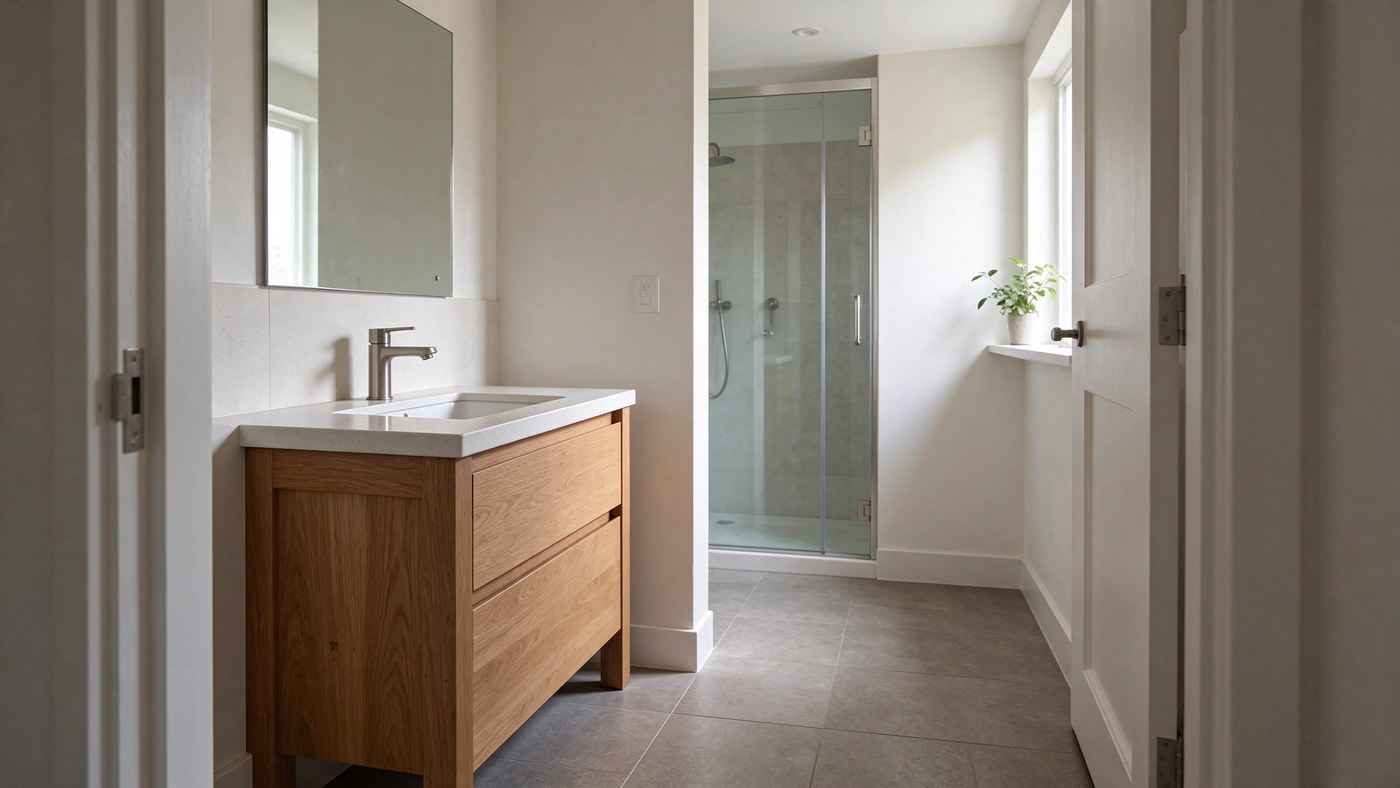
AI-generated new concept illustration; not a recovered original, actual Alya Bath product photograph, measurement, or verified depiction of any specific SKU or facility.
Decide which kind of value your client needs
A client preparing to sell soon has a different spending decision from someone planning to use the bathroom for years. For example, replacing a working vanity purely for a different finish may be hard to justify before a sale. For a household that can’t store its everyday supplies, a better cabinet layout may address a persistent problem.
Discuss resale separately from comfort and operating costs. The National Association of REALTORS’ Remodeling Impact research considers homeowner satisfaction, buyer demand and estimated cost recovery as distinct outcomes.1 A project your client loves doesn’t automatically return its full cost at sale. Likewise, lower water use doesn’t tell you how much a buyer will pay for the house.
For a near-term sale, ask a local real estate professional to compare the proposed scope with similar homes and likely buyer expectations. For longer-term use, ask which frustrations occur daily and which features the household will actually maintain. Keep estimates conditional on the local market and the existing bathroom’s condition.
Compare complete installed scopes, too. Moving plumbing, opening walls or adding electrical work changes the cost of a feature beyond its purchase price. Request separate prices for necessary repairs and optional changes so your client can see what each decision adds.
1. The right lighting: fund useful light before decoration
A beautiful pendant won’t help much if your client still struggles to shave or apply makeup. Picture a bathroom with bright ceiling downlights but a dark face in the mirror. Increasing bulb brightness may leave the same shadows while creating more glare.
The Department of Energy’s 2012 residential lighting guide distinguishes general room lighting from task lighting for activities such as grooming. Its bathroom guidance recommends light reaching the face from the sides as well as above to reduce shadows. It also explains that larger or partitioned bathrooms may need lighting beyond the vanity area.2
Plan lighting alongside the mirror and cabinet layout before the electrical work is finalized. Check how the proposed fixtures illuminate someone standing at the sink, and whether tall cabinets block light. Consider the shower and toilet area separately if partitions prevent general light from reaching them. Your electrician should confirm appropriate fixtures and installation requirements for their locations.
From a value perspective, pay first for adequate grooming light and practical room coverage. Add decorative lighting only if it serves the client’s preferences within the remaining budget. Separate controls can be useful where the household wants different lighting for getting ready and winding down, but an elaborate control system needs a clear purpose.
Keep the design proportionate. A small, open bathroom may work with fewer well-placed fixtures; adding lights everywhere isn’t automatically an improvement. The bathroom vanity lighting guide covers placement and selection in more detail. Here, the spending priority is a usable mirror and room, not the most expensive fixture.
2. Smart storage: buy usable capacity, not cabinet size alone
A bathroom without a linen closet often needs the vanity to hold much more than toiletries. For example, towels may fit in a deep cabinet, while small grooming items become difficult to find at the back. A wider vanity won’t solve that problem if its layout doesn’t suit what your client stores.
Before selecting cabinetry, ask the client to identify daily-use items and bulk supplies. Match shallow, accessible storage to small items and reserve suitable cabinet space for larger ones. Allow for the drain and supply lines, which can reduce usable space inside the vanity. Don’t count an exterior dimension as an interior storage measurement.
Check access in the room as carefully as capacity. Doors and drawers should open through their intended travel without striking adjacent fixtures, trim or another door. A cabinet that fits between two walls may still be awkward to use. The measurement guide and vanity storage guide explain those checks without requiring you to redesign the entire room.
The original article recommended a mix of storage types. Keep that idea, but choose the mix for the household. Open shelves can work for frequently used towels; enclosed cabinets keep other supplies out of sight. Alya Bath’s recovered Wilmington collection description identifies a display bottom shelf, offering a useful contrast with the enclosed cabinet designs in Norwalk . Confirm the particular model’s layout before specifying either. An open shelf adds little value if your client dislikes keeping its contents tidy.
Treat a shower niche as a planned option
A hanging shower rack can intrude into a tight shower, and a crowded suction shelf may be easy to knock. A recessed niche can remove that obstruction, which preserves one of the original article’s most useful suggestions.
It isn’t a requirement for every renovation. Compare the benefit with the work needed to create it. If the shower walls are already being rebuilt, discuss niche placement before framing and waterproofing. Check the client’s bottles, comfortable reach, pipe routes and the waterproofing system’s details. If a finished shower is otherwise sound, a suitable shelf may solve the storage problem without opening the wall. Avoid adding a niche purely because it appears in an inspiration photograph.
3. Sustainability: specify a benefit you can verify
A client may ask for a sustainable bathroom but mean lower utility bills, less waste or natural-looking materials. Those goals lead to different purchases. For example, replacing a sound cabinet with a wood-finish model changes the appearance; the finish alone doesn’t establish an environmental benefit.
Start by considering what can remain in service. If an existing vanity is sound, its layout works and its finish can be repaired appropriately, retaining it avoids buying another cabinet. If replacement is needed, compare maintenance requirements and ask about access to replacement hardware. A feature that’s difficult to maintain or repair may create another replacement decision later.
For water use, the EPA explains that WaterSense-labeled bathroom faucets and faucet accessories undergo independent certification for efficiency and performance.3 That gives you a specific attribute to verify rather than a general environmental slogan. Check compatibility with the basin and faucet openings. Savings depend on the fixture being replaced, household use and local utility rates; don’t turn the label into a promised bill reduction or resale return.
Natural wood, woven accessories and marble can support the calm appearance discussed in the original article. Choose them because your client likes their character and accepts the care involved. They don’t all suit the same exposure or cleaning routine, and their appearance doesn’t prove responsible sourcing. The vanity materials overview and countertop materials guide help separate cabinet and surface decisions.
Keep archived environmental promises in context
A client reading historical Alya Bath copy could interpret a manufacturing philosophy as a current certification. The original article and preserved About page described naturally variable raw materials and a philosophy pairing craftsmanship and advanced technology with lower environmental impact.5 These are archived company statements, not independently verified current manufacturing performance, sourcing certification or product-specific environmental data.
For a project with environmental requirements, request current documentation for the exact product and claimed benefit. The FTC’s Green Guides advise against broad, unqualified claims such as “green” or “eco-friendly” and call for clear, specific qualifications.4 Carry that discipline into your proposal: describe the evidence you have, rather than promising a sustainable result for the whole bathroom.
Put the priorities into the project scope
A proposal can hide trade-offs when every upgrade appears in one total. For example, your client may approve a premium top without realizing that it uses the funds needed for better mirror lighting. Separate the decisions so they can choose deliberately.
First, price the work needed to make the room sound and safe. Next, identify the daily-use problems the design should fix. List discretionary appearance changes separately, including any extra installation work they trigger. Leave room in the budget for conditions that can’t be confirmed until work begins.
For the vanity specification, use the choosing guide to compare fit and function. Trade professionals can ask about unresolved Alya Bath model details at support@alyabath.com ; don’t promise a project schedule from an archived listing.
Before approving the scope, ask the client to describe a normal morning in the proposed bathroom. If they still can’t see clearly at the mirror or reach what they need, redirect the next optional dollar to that problem before adding another decorative feature.
Editorial disclosure: Alya Bath Editorial updated this original January 9, 2023 article on November 27, 2026. The original lighting, storage and sustainability themes are preserved with added planning advice and clearer limitations.
References
- National Association of REALTORS: Remodeling Impact research
- US Department of Energy: Strategy Guideline, High Performance Residential Lighting, February 2012
- US Environmental Protection Agency: WaterSense Bathroom Faucets
- Federal Trade Commission: Environmental Claims, Summary of the Green Guides, October 2012
- Alya Bath: preserved About page and archived company statements